
Pubs and Tailors in the Crosshairs as Labour Takes Aim at a Countryside Tradition
Game shooting provides rural towns with an economic lifeline, but bureaucrats are plotting a crackdown
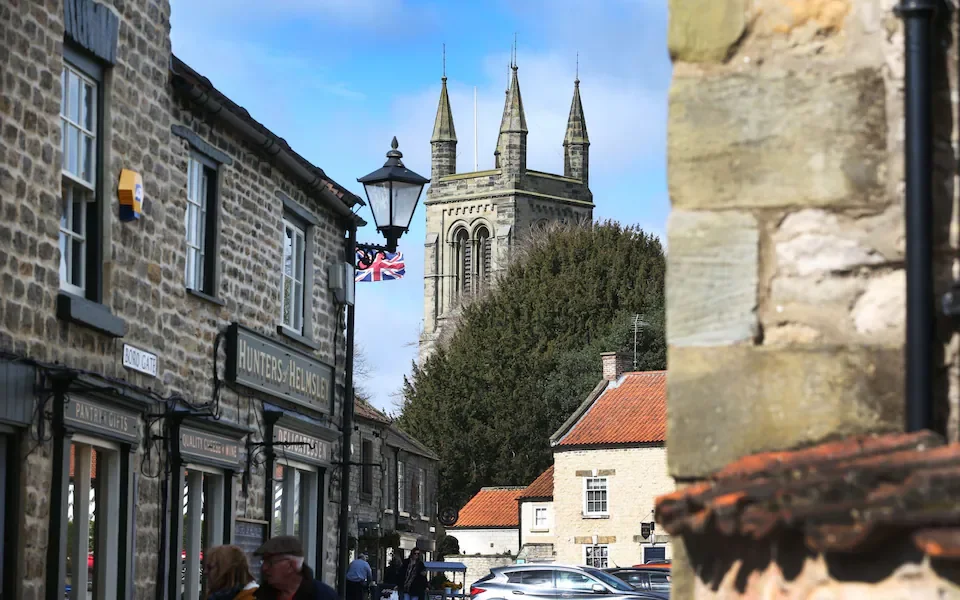
There is something different about Helmsley. Built on the banks of the River Rye on the edge of the North York Moors, the picturesque market town is a striking throwback.
There are four pubs in the town square, a Michelin-starred thatched inn nearby and a bustling rural outfitter. In a country where many high streets are dying, Helmsley bucks the trend.
The reason for its success, according to business owners and Kevin Hollinrake, the local Conservative MP, is game shooting. What Brighton used to be to mods and rockers, Helmsley is to people in tweed.
How long that remains the case, however, is another matter.
On 18 March, Labour released its long-awaited Land Use Framework, a 56-page document setting out the Government's vision for the future of the countryside. It included a pledge to cover half a million acres with solar panels, a commitment to rewilding nine per cent of farmland and, buried in a few paragraphs on page 45, a line about exploring the "licensing" of game bird shooting.
This could include imposing restrictions on releasing pheasants and partridges on to estates, prompting widespread anxiety over what some fear amounts to an effective ban on shooting.
From a conservation perspective, the proposal stems from concerns that releasing game birds in large quantities can disrupt local ecosystems. But Hollinrake, who shoots regularly, warns that a new licensing regime will have a disproportionate impact on rural life.
Speaking to The Telegraph, the Conservative chairman said: "This is the thin end of the wedge. There'll be an insidious effect on shooting. It'll be bureaucracy that just wraps people up in red tape."
Hollinrake fears Labour's underlying aim is to regulate the sport out of existence, building on what he sees as its recent assault on rural Britain following the ban on trail hunting. In his view, it will be the smaller shoots that disappear first, unable to afford a licence, before the death knell sounds for the kind of premier shoots that made Helmsley famous.
Typically, a day on a top-tier shoot can see a team shoot 250 birds, at a cost of around £75 each. Such events are hosted on a number of well-known estates near Helmsley. There is Farndale, where guests can shoot pheasants, partridges and grouse; Rievaulx, famed for its testing birds and 12th-century abbey; and Duncombe Park, a 450-acre estate built by the Feversham family in 1713. A statue of the second Baron Feversham, whose family funded many of Helmsley's public buildings, stands in the middle of the town square.
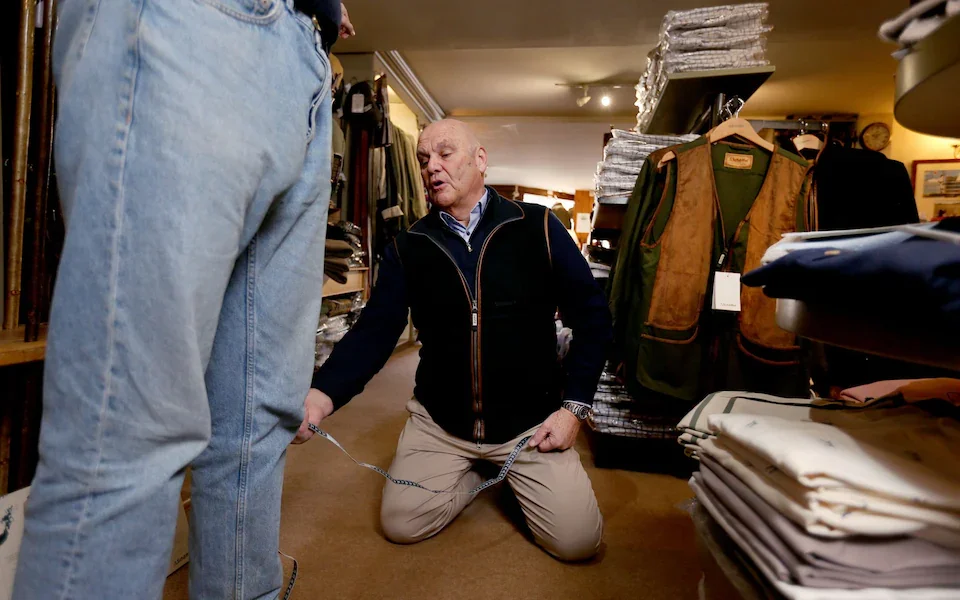
Across the road from that sandstone statue is Carters Country Wear, a much-loved rural outfitter run by local tailor Jeremy Shaw, a man as keen on making exquisite suits as he is on heading into the hills with his shotgun.
Shaw learned his trade as a young man in Leeds before taking on the shop from his mother, Betty Carter. Initially, he was warned against entering what a mentor called a "dying trade". Shaw persisted, largely because he believed there were advantages to being "the last tailor around". Forty years on, his business is thriving.
With a tape measure round his neck, Shaw stands next to bolts of tweed sourced from across the British Isles. "Huddersfield makes the best cloth in the world," he says, rubbing a 28-ounce piece of tweed between his fingers. The shop also carries tweed from the Scottish Borders, the Highlands and Bradford.
An economic lifeline
Shaw is nervous about what shoot licensing could mean, not least because he doubts that urban elites in London will consult the people who actually understand the countryside.
"I think the best people to ask about the countryside are people who live and work there all the time," he says.
He points to a recent case involving a local estate that was barred from releasing birds, which he regards as a clear example of urban bureaucrats overreaching. The estate in question ran a long-established partridge shoot, but Natural England forbade it from releasing birds until the season had already begun. Ordinarily, shoots put birds out during the summer so they are ready for the season opening on 1 September.
Natural England's intervention stemmed from concerns about partridges being released near moorland, a vital habitat for rare birds that benefit from the care of gamekeepers but can also be disturbed by excessive numbers of pheasants and partridges. The motto of the National Gamekeepers' Organisation is "keeping the balance".
Shaw says Natural England's intervention forced the estate to cancel shoot days, costing it vital revenue. For an operation largely dependent on shooting, every day counts, and there are widespread concerns that this is a sign of things to come.
For Carters Country Wear, around 75 per cent of revenue is shooting-related. Some of this comes from visiting sporting tourists who arrive to find half their party has forgotten their wellies. But Shaw also outfits local gamekeepers, and pride of place in the middle of the shop is a book of photographs of employees from local estates, including a picture of 12 gamekeepers from the Farndale, Snilesworth and Bransdale keepering teams after a day's shooting, all wearing tweeds measured and made by the Carters team.
"I've got one estate with 24 keepers," says Shaw. "So I measure them all up."
It might seem a minor point, but Shaw is keen to stress that for every suit he makes, he orders lining from a small mill in Essex and buttons and zips from Yorkshire. It is a complex rural economy that he fears Labour is preparing to target.
While the link between Carters and Helmsley's sporting culture is readily apparent, many other businesses in the town depend on shooting too. The nearby delicatessen Hunters of Helmsley is a favourite spot for a bacon roll before the day begins. Sam Garnett, who owns and manages the business, notes that German and Norwegian shooting visitors buy considerable quantities of local cheese.
As Ian Bell, chief executive of the British Association for Shooting and Conservation (BASC), puts it: "The economic benefits of shooting extend far beyond the money spent on a day in the field. Shooting provides an economic lifeline to towns like Helmsley. If it wasn't for shooting, many businesses in isolated, rural areas would be forced to close their doors. The shops, the pubs, the petrol stations, many of them would shut."
The latest analysis shows that shooting contributes £3.3 billion annually to the UK economy and supports 146,700 jobs, according to BASC.
The Star Inn
One of Helmsley's most remarkable businesses is the Star Inn, which sits just outside the town in the hamlet of Harome. A Michelin-starred, 14th-century thatched gastropub at one end, with a menu featuring pigeon and venison, it is also a convivial local pub frequented by gamekeepers and farmworkers.
Hollinrake says the Star Inn is one of the reasons he moved to the village in 2024. What makes it special, he argues, is that it serves visiting tourists with money to spend while remaining a genuine local for gamekeepers, beaters and farmers alike. Owner Andrew Pern bought the business in 1996 at the age of 25 and has since turned it into a hub that, in many ways, mirrors the world of shooting in miniature. Dukes, dustmen and Texas oil barons can all bond over a shared appreciation of spaniels and fieldcraft.
Tourism boom
There is a sense in Helmsley that the whole local economy is built on thriving, interconnected businesses, all dependent on shooting and complementing one another. Those visiting the area to shoot might call in at Shaw's tailoring shop before dining at the Star and spending the night at The Pheasant, a quintessentially English hotel with 16 bedrooms and roaring fires.
Liam McDonnell, The Pheasant's general manager, is unequivocal: "Without shooting, the hotel would not be financially sustainable throughout the whole year. Sixty per cent of our business in the winter is shooting. We are still busy until the end of January."
In North Yorkshire, according to the local council, 32.2 million annual tourists contribute £4.2 billion to the economy, including a significant proportion who visit to shoot.
McDonnell is well versed in shooting's broader benefits. "Yorkshire has more Michelin stars per capita than anywhere else in the UK," he says. "Because of that, our tourism is constant and not just something that happens in the summer." One practical consequence is that a young Yorkshireman with ambitions as a top-flight chef can build a career in a town like Helmsley rather than having to move to London or Manchester. The Pheasant employs 46 staff; the Star Inn employs 40.
While Helmsley is perhaps the most vivid example of a shooting town, it is not the only one. Similar dynamics are visible in Bettws Cedewain in mid-Wales and Alnwick in Northumberland.
A tradition remade
Shooting's more informed critics occasionally note that driven shooting, which involves beaters flushing game towards a line of waiting guns, is not as ancient a tradition as it might appear. It is deeply embedded in Yorkshire life, but it is not a centuries-old practice in the way that hunting with hounds once was.
Its popularity grew sharply in the late 19th century as firearms technology advanced. With that growth came a gradual reshaping of the landscape. Spinneys of woodland were planted in parkland around large country houses such as Duncombe Park to create drives. Large estates would often maintain a grouse moor for days in late August and September before moving to lower parkland ground through the winter months. Heather was burned to encourage new growth for grouse to feed on. The blooming purple moorland that visitors love is sustained, in large part, by grouse management.
Shaw recalls a woman who visited Yorkshire on a hiking holiday, popping into his shop to say how much she loved the heather hills and wooded dales, while confessing she could not abide the idea of people heading out on the Glorious Twelfth to shoot grouse. It was, he feels, a worryingly common example of summer tourists failing to understand that the very landscape they had come to admire exists because of the activity they object to. It is not so much a case of having your cake and eating it as marvelling at the cake while condemning the baker.
According to the Moorland Association, 20 per cent of English and Welsh upland heath has been lost through over-grazing and the spread of bracken. Yet in the past 25 years, grouse moor owners have regenerated and restored 217,000 acres of land, casting doubt on the Government's concerns about the land used for shooting. Meanwhile, according to the Game and Wildlife Conservation Trust, the near-extinct curlew is four times more likely to fledge successfully on a managed grouse moor than on moorland not managed by keepers.
Yorkshire's identity at stake
Shooting is woven into what makes Yorkshire the place it is. If it were to be squeezed out by bureaucratic regulation, it would erode the county's identity, just as the disappearance of hunting has done on Exmoor.
Nick von Westenholz, chief executive of the Game and Wildlife Conservation Trust, puts it plainly: "The whole country is facing a challenging economic climate right now, but those challenges in places like Helmsley are quite different from most of urban Britain. Jobs on farms and shoots, and in the range of supporting sectors, can be critical when a lot of employment is geographically out of reach. If we want to maintain the viability and cultural heritage of villages and towns in our rural communities, it is vital that there are businesses operating at their physical heart."
Dave Sugden, who has lived in North Yorkshire for 30 years and now works as a mole catcher after a career in gamekeeping, recalls that a couple of years ago a pub in Helmsley changed hands and the new owners decided they did not want to be associated with shooting. "It had been the place to go," he says, "but the owners said they didn't want teams of guns staying there because they were a bit anti-shooting." It was only after suffering steep losses that the landlords returned to local shoot owners, cap in hand.
Mole catching is only part of Sugden's income. He supplements it by loading for people shooting double guns, a role that involves standing just behind the shooter on a busy day, swapping an empty gun for a loaded one in one seamless motion. "I could probably name you five or six other lads whose sole income is loading through the shooting season," he says. He also points out that a shoot will typically employ up to 30 beaters earning around £70 a day, along with five or six people working gun dogs to retrieve shot game at twice that rate. It may not sound like a great deal, but it is the kind of activity that keeps the rural economy ticking over.
Labour's Land Use Framework acknowledges that shooting covers a "substantial area" of England and results in "economic trade-offs". When The Telegraph pressed the Environment Department for details of those trade-offs, the initial response was vague. A spokesman later said: "We fully recognise the cultural importance of the recreational shooting sector and the role it plays in the rural economy. The Government will continue to work with industry to ensure a sustainable, mutually beneficial relationship between recreational game bird shooting and conservation."
Many in the industry fear, however, that policy is being shaped without regard for the consequences on the ground.
McDonnell notes that last week he went to a car valet in Helmsley, queuing behind a dozen Land Rovers from a local estate. The existence of a car valeting service in a small Yorkshire market town is, he suggests, a useful measure of the economic activity that shooting generates.
Hollinrake says what he would really like is for Sir Keir Starmer to travel north and see how Helmsley works for himself.
"I'll take him to the Star," he says. "I'll introduce him to the people, the gamekeepers and the beaters. This is about the local community."
The Telegraph passed on the invitation to the Prime Minister's office. No reply was received.